
A Foreign ETF Is Not a Canadian ETF With a Different Ticker
The exposure may look the same. The protections around it don't.
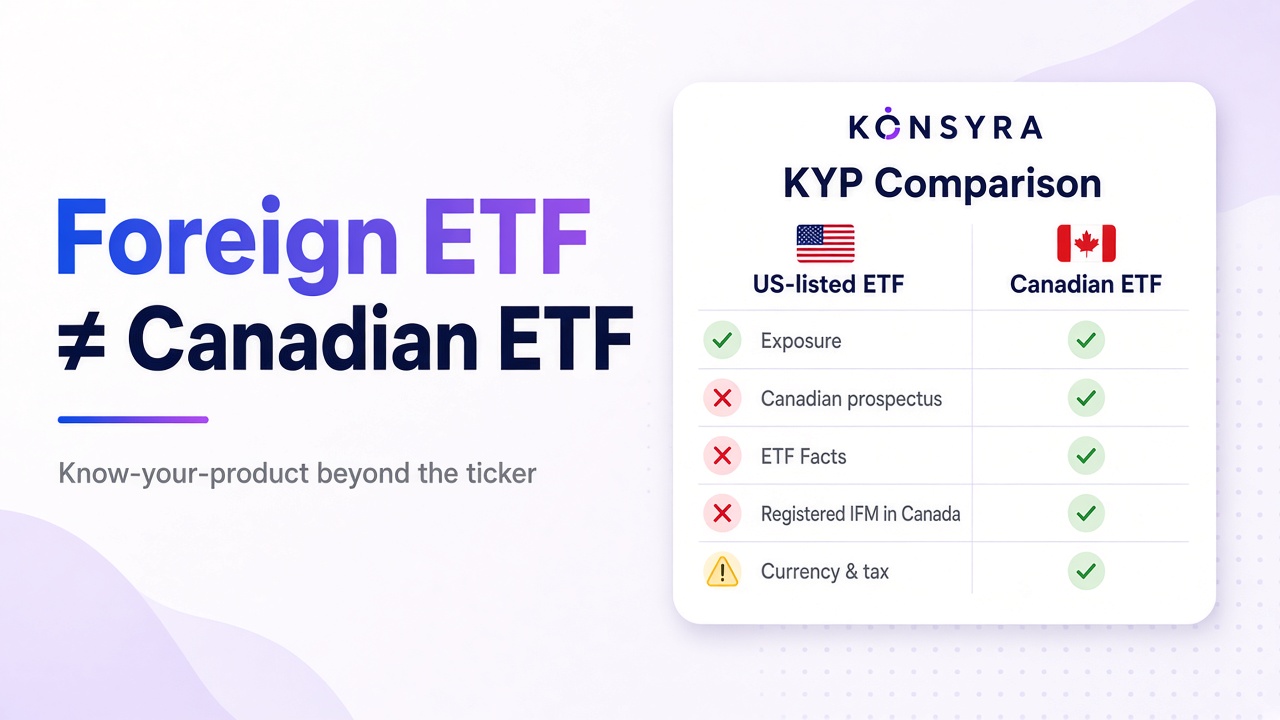
The gap between exposure and protection is the core issue in Joint CSA/CIRO Staff Notice 81-339, published by CSA and CIRO staff on July 29, 2026. It deals with ETFs listed on a foreign exchange but not also listed on a Canadian exchange. The notice calls them Foreign ETFs.
A US-listed ETF can look a lot like a Canadian ETF tracking the same index. Similar holdings. Sometimes a similar name.
But a KYP file that only describes the exposure is describing half the product.
The other half is everything the client does not get.
Nothing new, which is the point
Staff are clear that the guidance “does not create any new legal requirements or modify existing ones.” The OSC news release frames it the same way: the notice clarifies how know-your-product, know-your-client and suitability obligations apply to the sale of foreign ETFs.
That cuts both ways.
There is no new rule to implement. But there is also no grace period. Existing KYP, KYC and suitability obligations already apply to Foreign ETFs. The notice just spells out what they look like here.
And this is not a niche product type. According to the notice, as of March 2026, Foreign ETFs made up approximately one quarter of total ETF assets held by Canadian retail investors in accounts at Canadian registered dealers.
That is a lot of holdings that need a defensible file.
What is actually different
Section B.IV of the notice sets out the key differences. They are the raw material for the “what the client doesn’t get” side of the file.
No Canadian prospectus, and usually no Canadian-registered manager. Foreign ETFs have not filed prospectuses in Canada, and their managers are typically not registered in Canada as investment fund managers (IFMs).
Different disclosure. Foreign ETFs typically do not file the disclosure documents Canadian ETFs are required to file, and may be subject to different cost reporting obligations. In particular, a person buying a Foreign ETF would generally not receive an ETF facts document.
Different investment restrictions. Foreign ETFs are regulated under foreign law, not National Instrument 81-102. Some may use strategies that would not be permitted for a Canadian ETF subject to NI 81-102.
Fewer tools for Canadian regulators. Because the manager is typically not registered here and the fund typically does not file a prospectus, ETF facts or continuous disclosure in Canada, Canadian regulators may have a more limited set of regulatory tools if something goes wrong with the fund’s management or disclosure.
Tax and currency. Tax considerations may differ from those of a Canadian ETF. Clients without an account that can hold the relevant currency may incur conversion costs and currency exposure risk. And Foreign ETFs generally do not offer currency-hedged options tailored to Canadian investors.
None of this makes a Foreign ETF a bad product.
It just makes it a different product.
What the KYP file should cover
Section C.II(a) reminds dealers that they must not make a Foreign ETF available to clients, including by advertising it, unless they have taken reasonable steps to assess it, approve it, and monitor it for significant changes. The assessment covers the usual: structure, features, risks, initial and ongoing costs, and the impact of those costs.
Then the notice gets specific. In staff’s view, for Foreign ETFs, the KYP assessment may include:
- the disclosure available to investors for the fund;
- general tax considerations;
- key currency exposure and conversion cost implications;
- whether the manager is registered as an IFM in the applicable Canadian jurisdiction, and if not, the general implications for the investor; and
- the general implications for the investor of the fund not being distributed under a prospectus filed in Canada.
The last two items are the ones most files will miss.
The notice describes them as the implications of the fact that “investor protection-related provisions in Canadian securities legislation that apply when an IFM is registered in that jurisdiction are not applicable,” and the equivalent point for a fund without a Canadian prospectus.
In practice, a strong shelf-approval file for a Foreign ETF answers a few plain questions:
- What disclosure will the client actually have? If there is no ETF facts, what is there instead, and is it something the client can realistically use?
- Is the manager registered as an IFM in the relevant Canadian jurisdiction? If not, what does the firm understand that to mean for the client?
- What does the absence of a Canadian prospectus mean for the client, in plain terms?
- Can the fund use strategies a Canadian ETF under NI 81-102 could not?
- What currency and conversion costs come with it, and is a Canadian-hedged version available? (Generally, the notice says, it is not.)
- What general tax considerations should advisors be aware of?
Proportionality still applies. Pointing back to Staff Notice 31-368, the notice says the depth of review may vary with the firm’s business model and the complexity and risks of what it offers.
But “it’s just a broad index fund” is not, on its own, an answer to the IFM and prospectus questions. Simple exposure doesn’t change who manages the fund or where it filed.
The comparison that matters
For dealers that are not order-execution-only, and their dealing representatives, the notice adds the individual layer in section C.II(b). Before recommending or buying a Foreign ETF for a client, the representative must understand the product, including the elements above.
The suitability factors staff list include the client’s KYC information, the impact on the account (including concentration and liquidity), the impact of costs on return, and “a reasonable range of alternative actions available at the time of the suitability determination, including other products such as Canadian ETFs that offer similar exposure.”
That last phrase is the practical heart of the notice.
If a Canadian ETF offers similar exposure, it belongs in the comparison. Not as a formality, but as the obvious question a reviewer will ask: why this one and not that one?
A useful comparison puts the two side by side on:
- Exposure. How similar is it, really?
- Cost and currency. Including conversion costs and hedging, not just the management fee.
- Disclosure and protections. ETF facts and a Canadian prospectus on one side; whatever the foreign regime provides on the other.
- Tax, at a general level.
- Liquidity and concentration within the account.
Sometimes the Foreign ETF will win. It may offer exposure no Canadian product does. That is a legitimate reason. Stakeholder feedback cited in the notice makes the same point: Foreign ETFs can offer exposure to strategies and asset classes that may not otherwise be available to Canadian investors.
The point is that the file should show the comparison happened.
Documenting the rationale
The KYC side matters too. The notice encourages representatives to consider whether the client understands the key differences between Foreign ETFs and Canadian ETFs.
A good suitability note does not need to be long. It needs to answer:
- Which Canadian alternatives with similar exposure were considered?
- Why was the Foreign ETF preferred?
- How were currency, cost and tax considered?
- Did the client understand the key differences, including the protections that do not apply?
And it does not end at purchase. Representatives must periodically review whether Foreign ETFs in the account remain suitable, including after a change in the client’s information or in the fund itself.
Who this applies to
Staff state that the suitability guidance also applies to other registrants, “including portfolio managers and their advising representatives,” to the extent they make recommendations or exercise discretion in buying a Foreign ETF for a client.
Discretionary accounts are in scope.
The bottom line
A Foreign ETF can be a perfectly good choice.
But the KYP file needs to describe the whole product: the exposure the client gets, and the Canadian protections they don’t. Then it needs to show that a Canadian alternative with similar exposure was considered.
Staff say they will continue to review compliance with KYC, KYP and suitability obligations in this area.
The file should be ready when they do.
How Konsyra helps
Konsyra covers both sides of the comparison the notice asks for. It produces structured KYP reports for US-listed and Canadian ETFs, as well as Canadian mutual funds and stocks in the S&P 500, NASDAQ and S&P/TSX Composite.
That means a US-listed ETF and a Canadian alternative with similar exposure can sit side by side in the same format. You set the investor profile, objectives and risk tolerance, then export to DOCX so the report goes straight into the file. With Batch KYP Reports (Pro), you can run the US-listed ETF and several Canadian alternatives at once.
Each report links to pre-curated filings and fund facts, so the evidence behind the comparison is easy to find. And a Watchlist keeps key metrics in view when it’s time for the periodic suitability review.
Sources
Continue reading
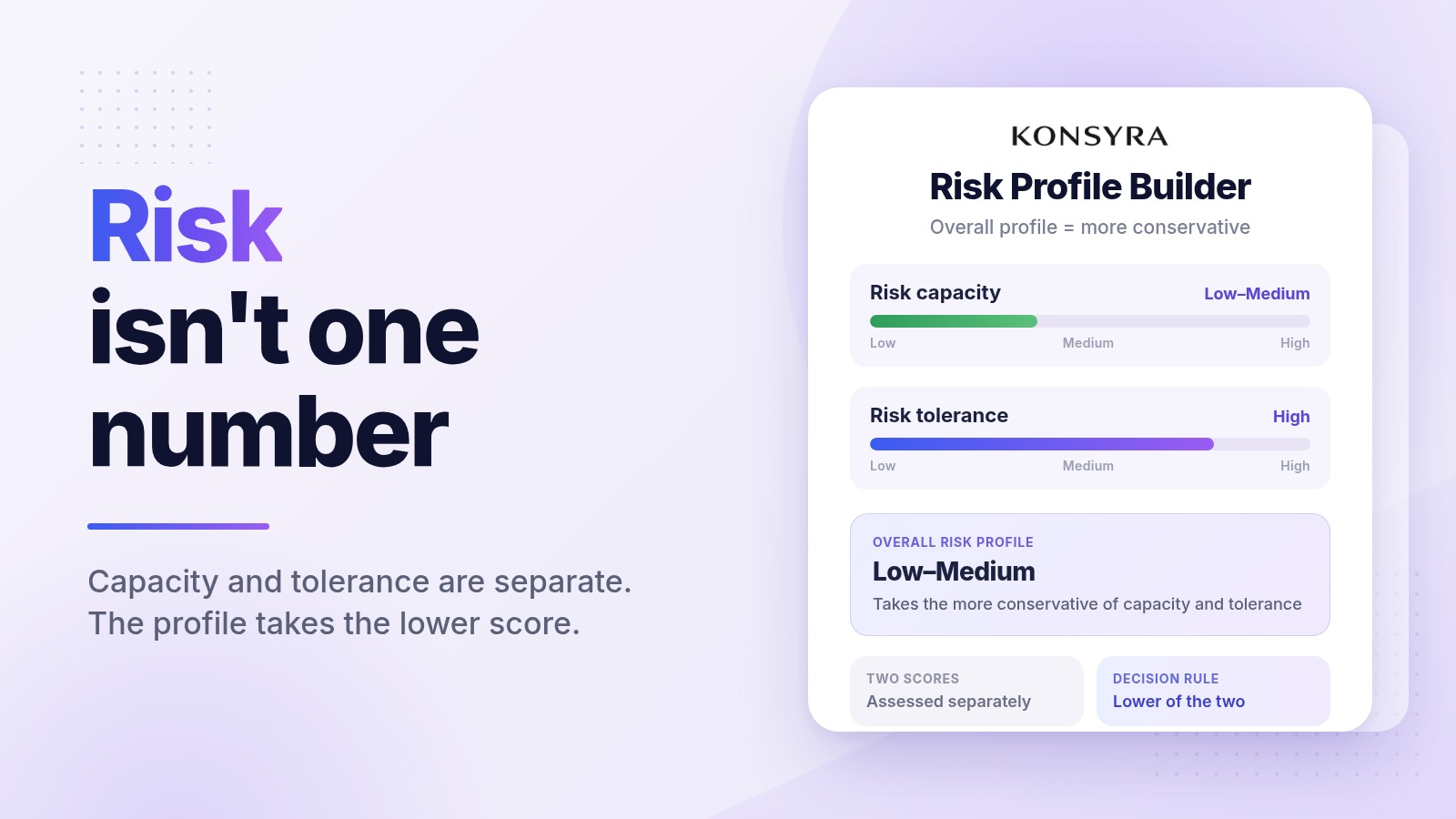
Risk Isn't One Number. Take the More Conservative.
CIRO Bulletin 26-0200 spells out what the Phase 2 CFR sweep already found: risk capacity and risk tolerance are separate assessments, and the overall risk profile should reflect the more conservative of the two.
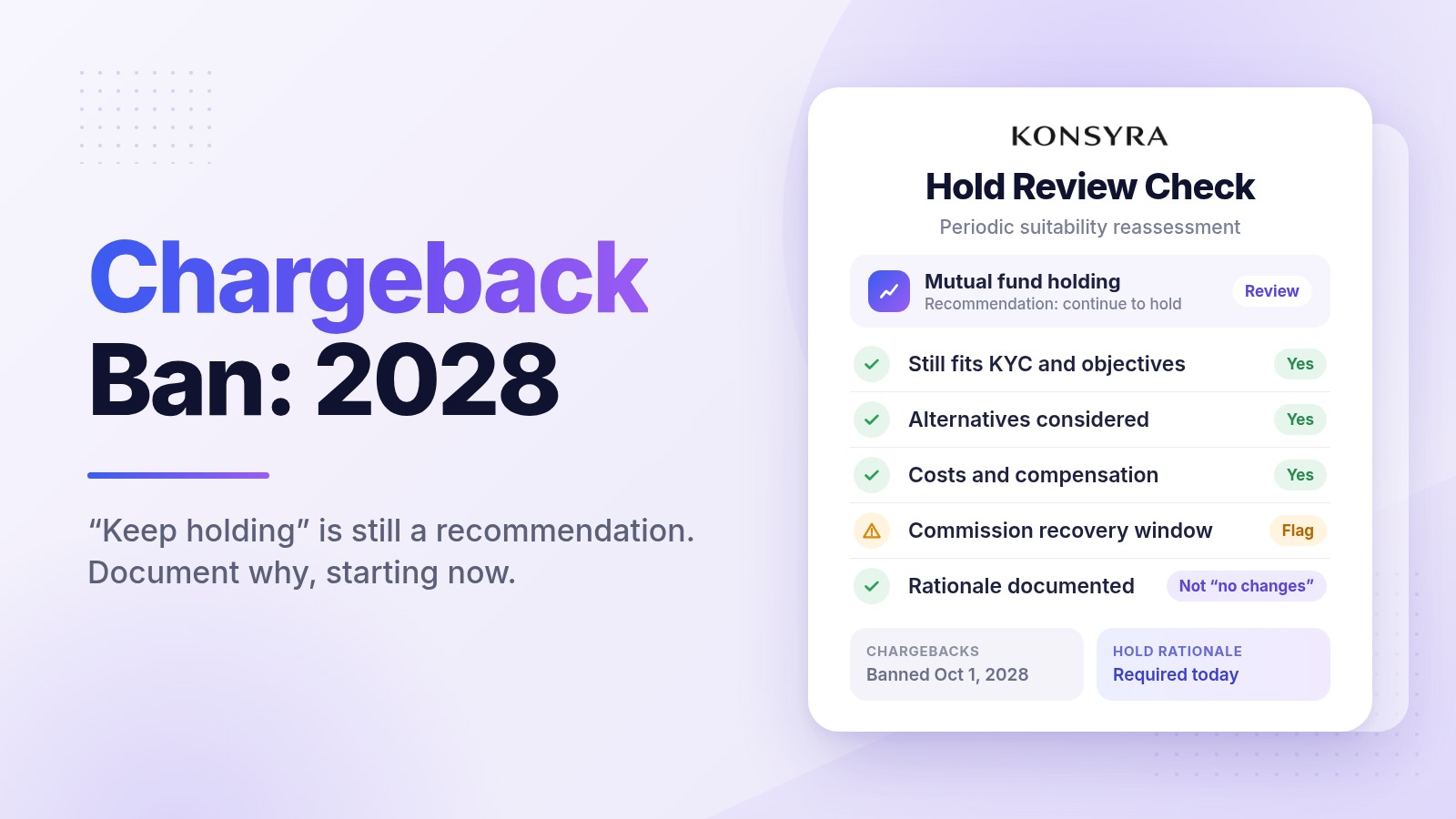
The Chargeback Ban Starts in 2028. The Conflict Is Already Here.
The CSA's chargeback ban takes effect in 2028, but the conflict it targets shows up today in every "keep holding" recommendation. Here's what to document now.
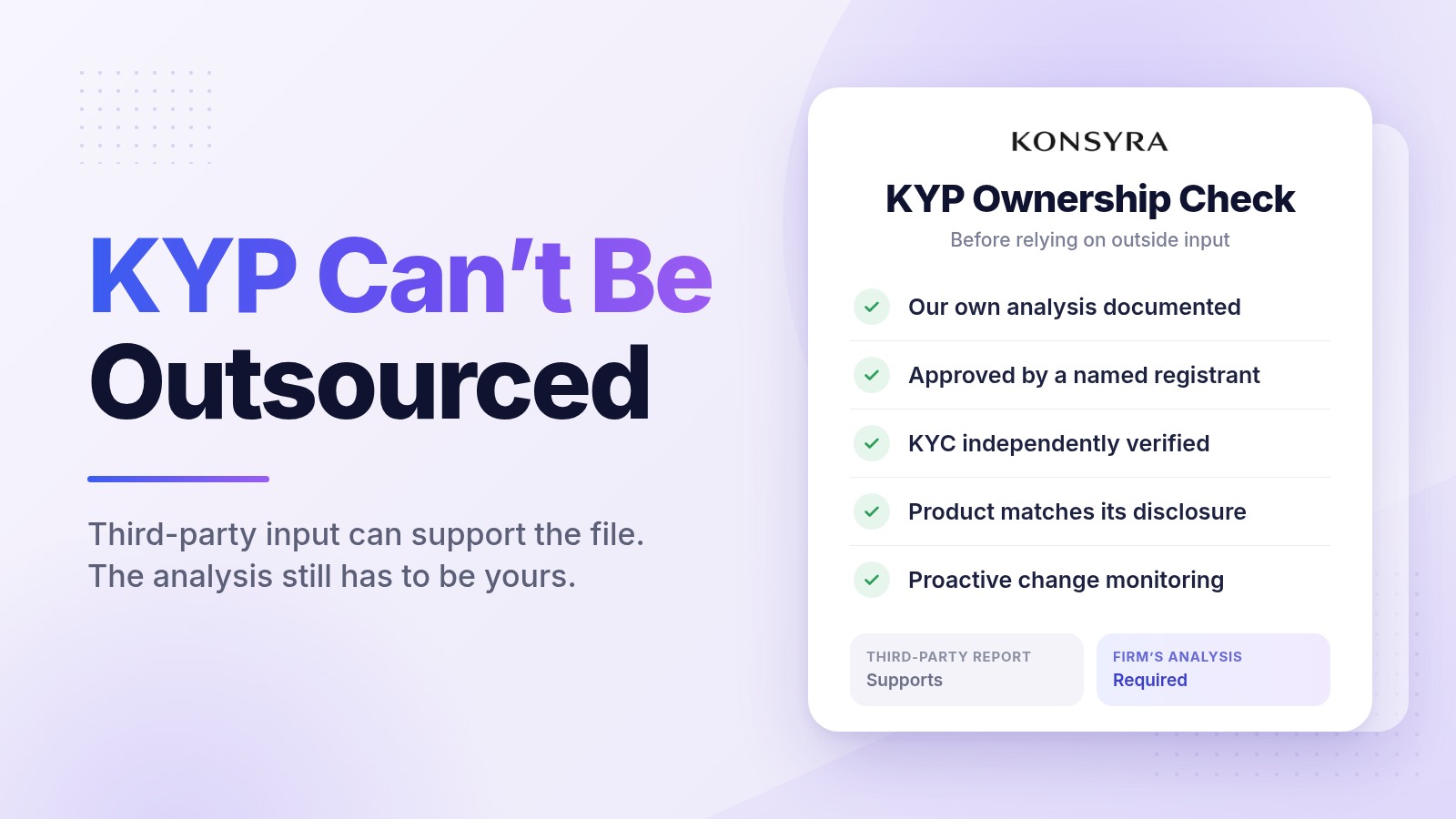
KYP Can Be Supported. It Can't Be Outsourced.
Third-party research can support a KYP file. The OSC's 2026 RIE report shows what happens when it replaces the firm's own analysis.