
Risk Isn't One Number. Take the More Conservative.
CIRO Bulletin 26-0200 spells out what the Phase 2 CFR sweep already found: risk capacity and risk tolerance are separate assessments, and the overall risk profile should reflect the more conservative of the two.
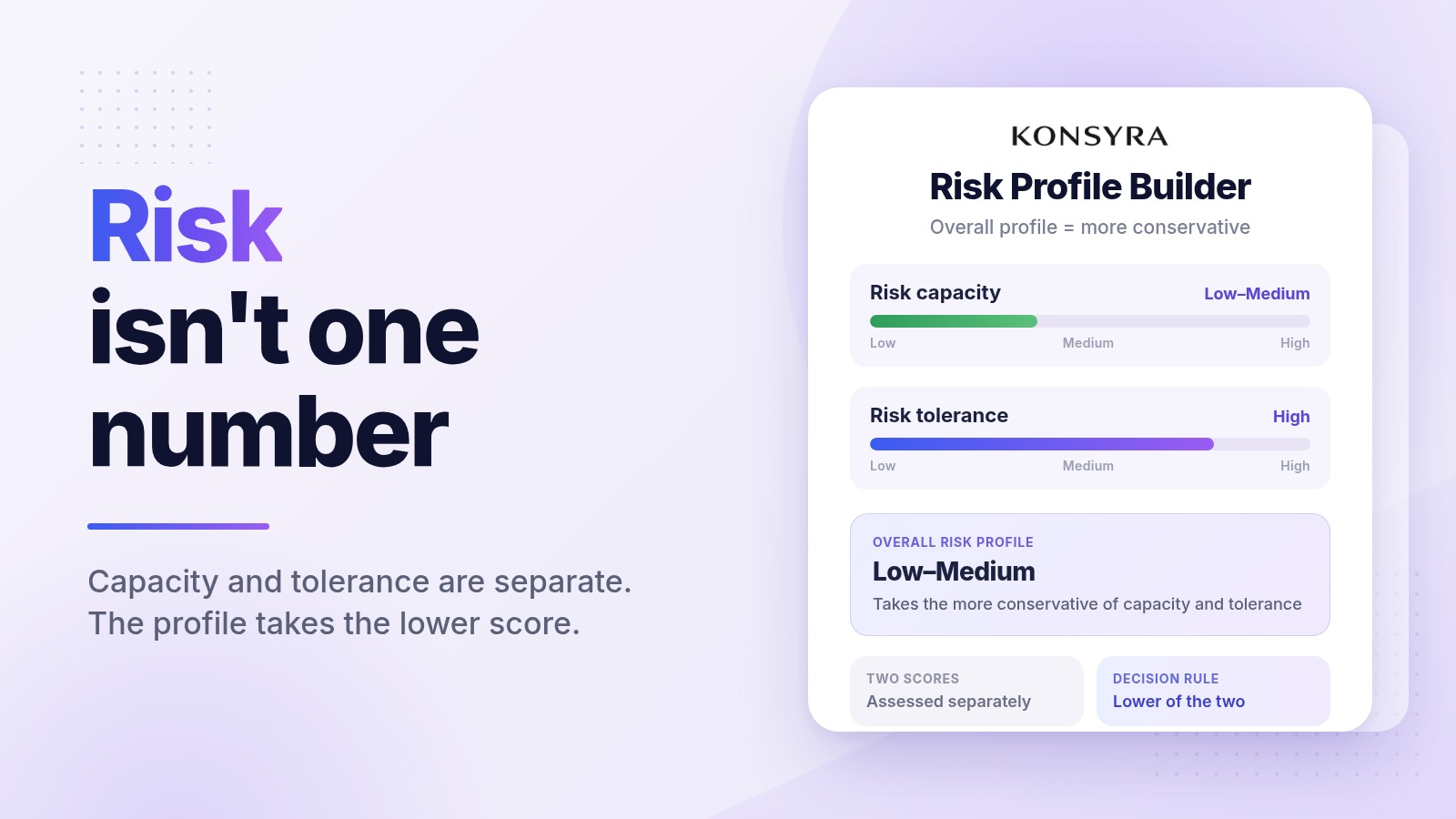
On September 10, 2026, CIRO published Bulletin 26-0200 — the first in a series of Client Focused Reforms (CFR) targeted compliance bulletins. The topic: KYC risk capacity, risk tolerance and risk profile.
This isn’t a new rule. It’s CIRO spelling out, with practical steps and exam findings, what dealers were already supposed to be doing.
The message is blunt. Risk tolerance (what the client is willing to take) and risk capacity (what the client can afford to lose) are separate assessments. The overall risk profile should reflect the more conservative of the two.
Firms that still treat “risk” as one slider are the ones the Phase 2 CFR sweep kept catching.
What the bulletin says
Bulletin 26-0200 sits under IDPC Rule 3202(1) and MFD Rule 2.2.1(1). Dealers must collect enough information about each client to meet suitability obligations, including personal and financial circumstances, investment needs and objectives, investment knowledge, risk profile and investment time horizon.
On risk itself, the bulletin draws three lines:
- Risk capacity: consider the client’s financial situation, including the size of the account relative to their total assets and their age or life stage.
- Risk tolerance: consider the client’s willingness and psychological ability to tolerate short-term fluctuations in value, using a methodology established by the dealer.
- Risk profile: assess both; use clear, fair questions and document responses; do not influence client answers or adjust profiles to fit higher-risk products; and set the overall profile to the more conservative of risk tolerance and risk capacity.
CIRO also lists common exam deficiencies: no documented process for assessing risk capacity, insufficient financial information, no documentation showing how capacity was determined, and no clear method for taking the more conservative of the two.
The Phase 2 sweep already said this
CIRO says the bulletins respond to common deficiencies found in its own exams and in the CSA-CIRO Joint Report on the Phase 2 CFR Sweep. That joint report is Staff Notice 31-368, published December 10, 2025.
SN 31-368 reviewed 105 registered firms. On KYC, a top finding was that “many firms lacked an adequate process to collect sufficient information from clients about their risk tolerance and risk capacity, and to use that information to determine the client’s risk profile.”
The notice’s guidance is unambiguous: “Risk tolerance and risk capacity are separate considerations and should be assessed separately, and a client’s overall risk profile should reflect the lower of the two.”
It also flags the one-slider pattern directly. Some registrants “had not updated their KYC processes to assess both risk tolerance and risk capacity, instead continuing to rely only on risk tolerance (which was the focus of the requirement pre-CFRs).” Others collected both but “had no process or had an inadequate process to arrive at an overall risk profile.” Some forms combined the factors so a client couldn’t even record high tolerance with low capacity.
If that sounds familiar, the bulletin is aimed at you.
Capacity needs numbers, not vibes
Willingness to take risk is a conversation. Ability to absorb loss is arithmetic.
The bulletin says dealers need a clear, consistent method for assessing risk capacity from KYC information such as income, assets, liabilities, time horizon and liquidity needs. The process should produce a defined result that can be compared directly to risk tolerance. The methodology belongs in policies and procedures, applied consistently, with inputs and outputs saved to the client record if a tool or algorithm is used.
It also warns against “overly broad ranges” for income, assets or net worth where the range wouldn’t support a meaningful assessment. And for joint accounts, collect client-specific financial information for each individual, not only combined totals.
Liquidity belongs in the same file. Near-term cash needs, emergency funds and whether the account itself is meant to stay available for unexpected expenses inform time horizon and capacity. The bulletin gives sample questions; the point is to document the answers.
One illustration, then the rule
CIRO’s TFSA example is worth keeping on a sticky note.
A client opens a $60,000 TFSA against roughly $400,000 in net worth and $35,000 in liquid assets, with a $50,000 home renovation planned within 12 months. Risk tolerance comes back higher. Risk capacity, given limited remaining liquidity and likely near-term withdrawals, comes back more conservative. Under the dealer’s decision rule, the overall risk profile reflects the more conservative outcome — and the rationale is documented.
That’s the whole bulletin in one file note. Two scores. Take the lower. Write down why.
If an approved person can override that outcome, the bulletin says require supervisory approval and a documented rationale. Supervisors should confirm the final profile reflects the lower of the two factors.
You can’t match a product to a profile that was never built
Suitability is where this stops being a KYC form problem and becomes a recommendation problem.
SN 31-368 says that before taking an investment action, registrants must consider the client’s KYC information and the registrant’s KYP assessment of the security, among other factors. KYC, KYP and suitability “are designed to operate in a holistic manner.”
If the risk profile is really just a single tolerance checkbox — or capacity was never assessed, or the overall profile wasn’t set to the more conservative result — the suitability determination is matching a product to fog. A thorough KYP file doesn’t fix a hollow KYC. It just makes the mismatch easier to see later.
That’s why the bulletin belongs next to your product due diligence work, not in a separate drawer. The profile has to be real before the product comparison means anything.
What to check this week
- Separate fields, separate scores. Risk tolerance and risk capacity should each appear in the KYC documentation, then a clear decision rule should set the overall profile to the more conservative of the two.
- Can capacity be compared to tolerance? If your process can’t put both on the same scale, you can’t apply the “more conservative” rule.
- Financial detail vs. broad ranges. Would your income, asset and net-worth fields support a real capacity assessment for the products you offer?
- Liquidity and time horizon. Near-term cash needs should show up somewhere in the file, even if not as a standalone field.
- Overrides. If reps can raise a profile above the lower score, is there supervisory approval and a written rationale?
- Existing clients. SN 31-368 flagged firms that updated the process for new accounts but not for KYC updates on existing ones.
- Client confirmation. Risk profile is KYC information. Clients should confirm it, and you should be able to show that they did.
- Training. Can every AP explain the difference between capacity and tolerance without collapsing them into “risk”?
The bottom line
Bulletin 26-0200 doesn’t invent the lower-of-two rule. SN 31-368 already said it. The bulletin turns that finding into practical steps, exam themes and examples dealers can operationalize.
The firms in trouble aren’t the ones arguing about definitions. They’re the ones still running one risk slider and calling it a profile.
Build the two assessments. Take the more conservative. Document the path. Then match products to something that actually exists.
How Konsyra helps
A suitability call is only as good as the profile and the product file behind it.
Konsyra lets you set a client’s investor profile, objectives and risk tolerance, then export to DOCX so the reasoning sits in the file when the recommendation is made. Structured KYP reports cover S&P 500, NASDAQ and S&P/TSX Composite stocks, US-listed and Canadian ETFs, and Canadian mutual funds, with pre-curated linked filings, transcripts and fund facts — so you can weigh a product against a profile that was actually built.
Batch KYP Reports (Pro) help when a review spans many holdings. Watchlist keeps client holdings in view, and Research adds earnings summaries plus sector and macro context.
We don’t replace your KYC process or set risk capacity. We help keep the product side — and the documented investor profile — ready when suitability asks both questions.
Sources
- CIRO Bulletin 26-0200, Client Focused Reforms (CFR) – Targeted Compliance Guidance: KYC: Risk Capacity, Risk Tolerance & Risk Profile (September 10, 2026)
- CIRO Education Bulletin 26-0199, New Webcast: Client Focused Reforms (CFRs): Targeted Compliance Guidance for CIRO Dealer Members (September 10, 2026)
- Joint CSA/CIRO Staff Notice 31-368, Client Focused Reforms: Review of Registrants’ Know Your Client, Know Your Product and Suitability Determination Practices and Additional Guidance (December 10, 2025)
Continue reading
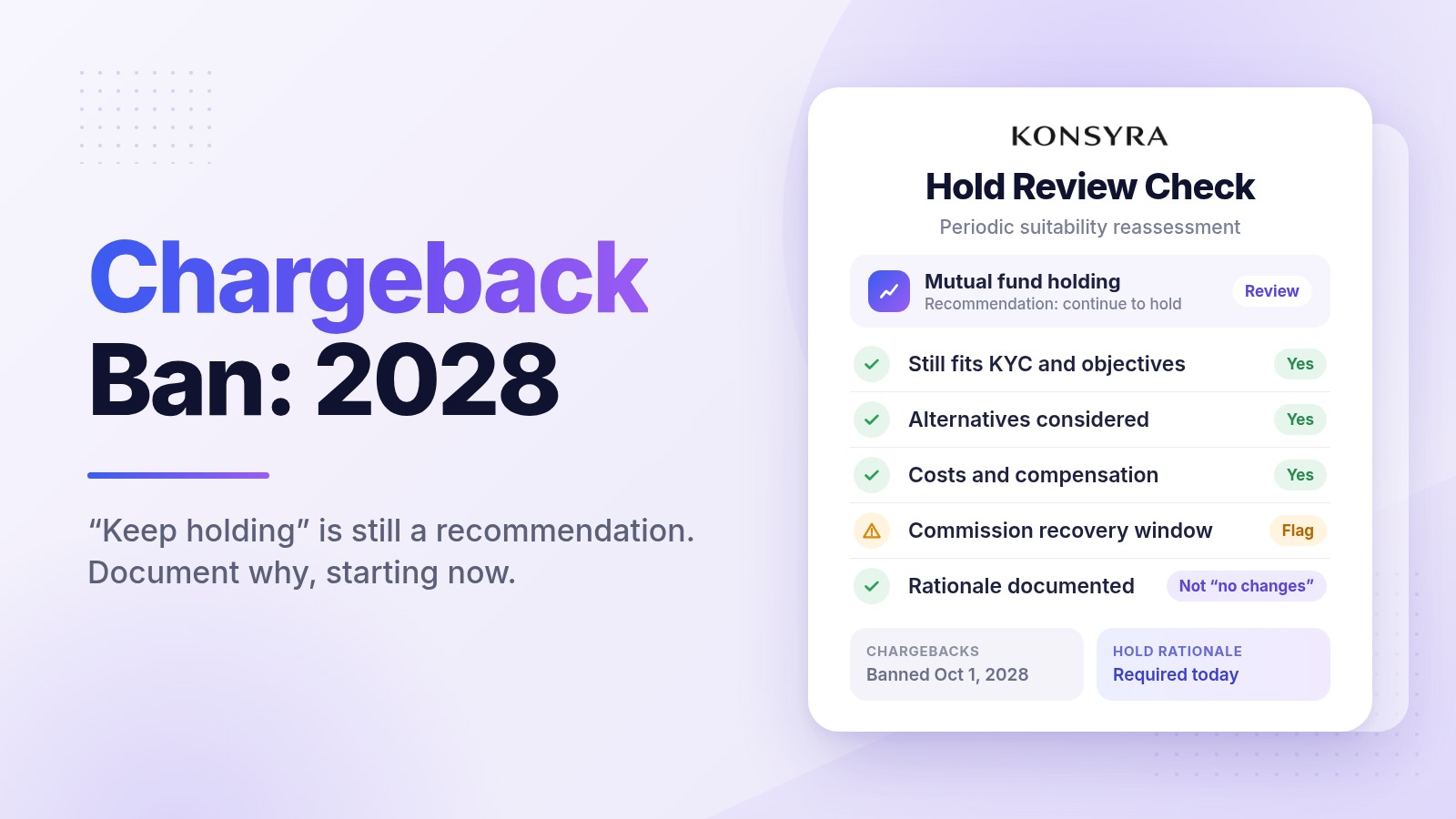
The Chargeback Ban Starts in 2028. The Conflict Is Already Here.
The CSA's chargeback ban takes effect in 2028, but the conflict it targets shows up today in every "keep holding" recommendation. Here's what to document now.
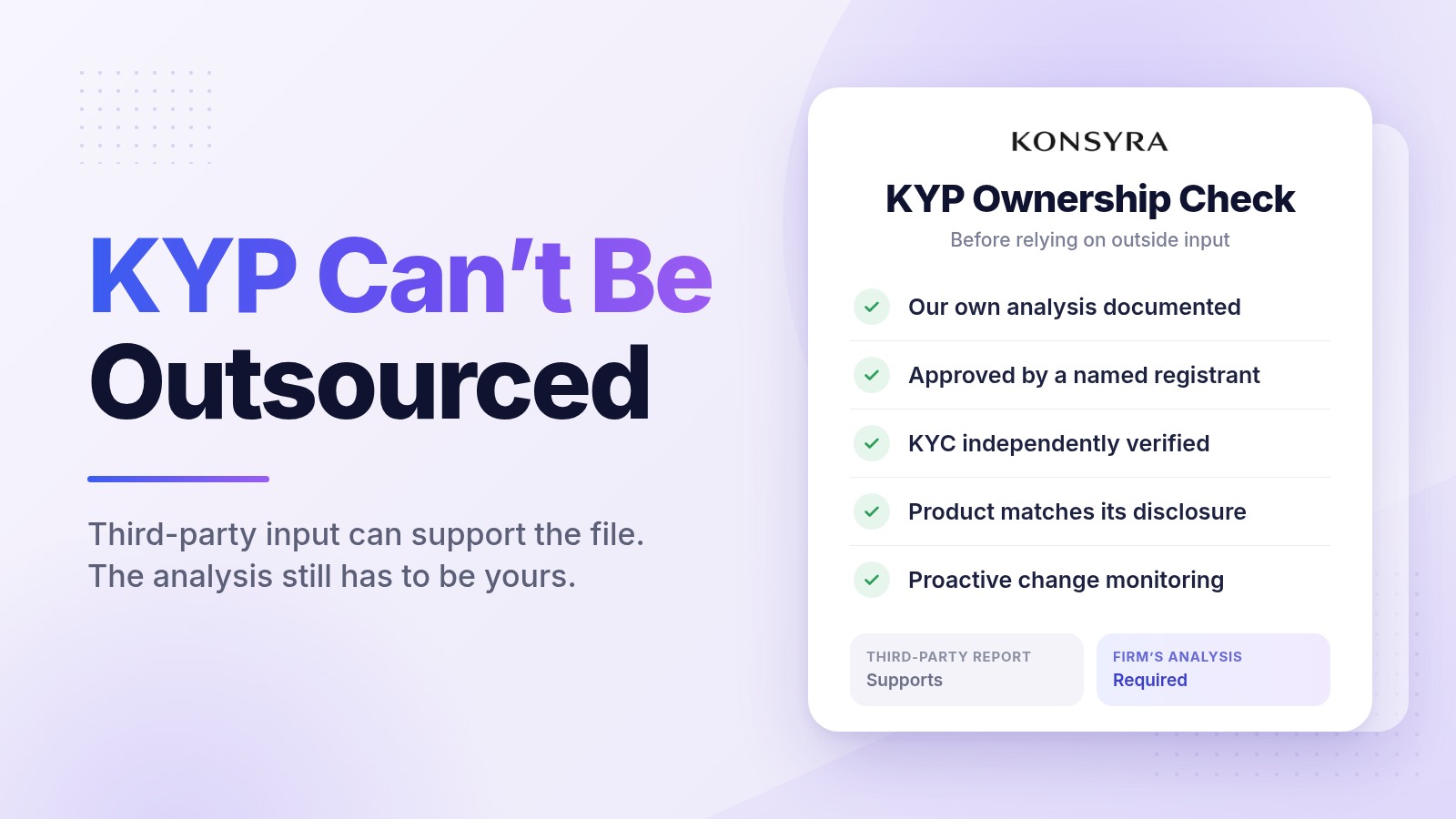
KYP Can Be Supported. It Can't Be Outsourced.
Third-party research can support a KYP file. The OSC's 2026 RIE report shows what happens when it replaces the firm's own analysis.
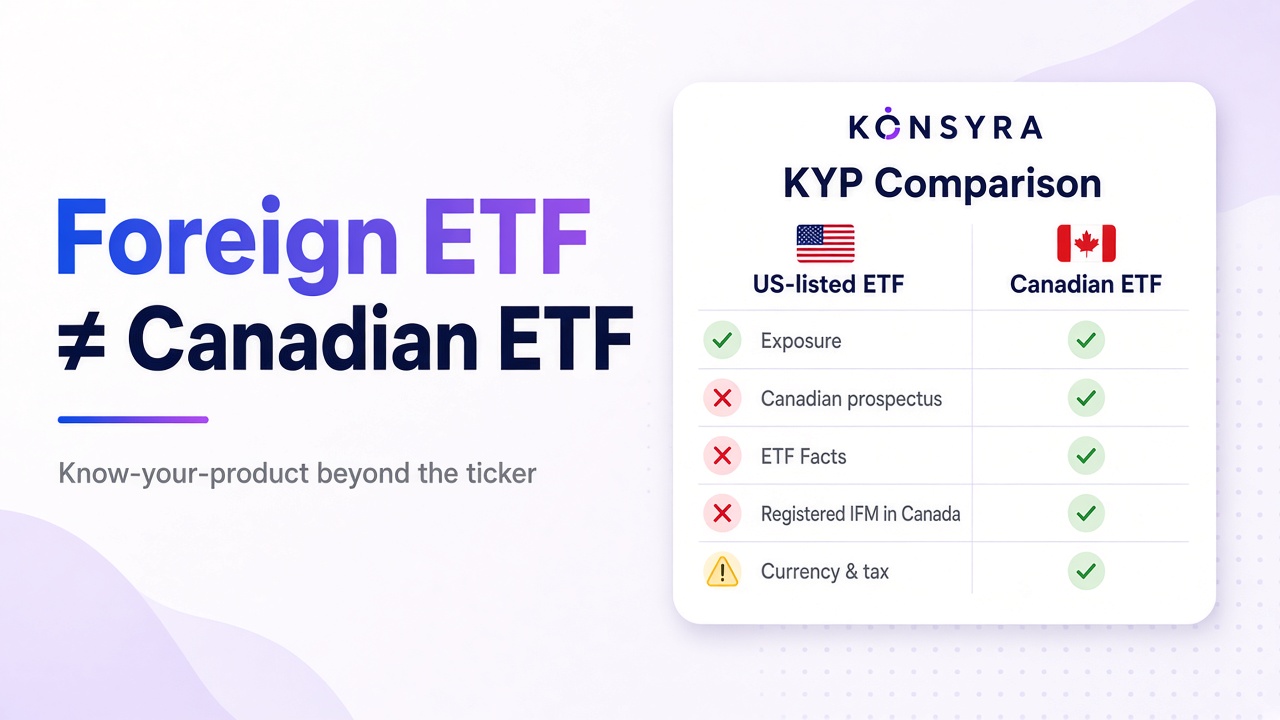
A Foreign ETF Is Not a Canadian ETF With a Different Ticker
The exposure may look the same. The protections around it don't.