
KYP Can Be Supported. It Can't Be Outsourced.
Third-party research can support a KYP file. The OSC's 2026 RIE report shows what happens when it replaces the firm's own analysis.
The OSC’s Registration, Inspections and Examinations (RIE) Division published its 2026 annual report on October 7, 2026. It’s OSC Staff Notice 33-762, and it covers the fiscal year ended March 31, 2026.
It’s a long document. Cybersecurity, AI, fees, insurance, derivatives reporting.
But read the KYC, KYP and suitability findings together and one pattern keeps showing up.
Someone else did the thinking. Or no one did.
Who should read it
The report focuses on firms the OSC oversees directly, like portfolio managers, exempt market dealers and investment fund managers.
But the news release says firms directly overseen by CIRO and other market participants “are encouraged to review the report for information and guidance that may also be relevant to them.”
And the report says Part 2 “can be used by registrants and derivative market participants as a self-assessment tool.”
So use it that way.
Four ways the thinking got handed off
To an unregistered third party. In section 2.2.3, on leverage in managed accounts, staff say they continued to see PMs “inappropriately relying on the recommendation from an unregistered third-party that the client use leverage without conducting their own suitability determination.”
To an affiliate. In section 2.2.12, staff examined the KYP practices of crypto-asset trading platforms. Some were “overly reliant on their affiliates to conduct initial due diligence and ongoing oversight.” Staff were concerned they were “outsourcing their KYP responsibilities without maintaining sufficient controls and oversight.”
The reminder isn’t limited to crypto. It’s addressed to all registrants: firms remain responsible for an adequate compliance system over an affiliate’s work, and for maintaining their own KYP policies and procedures under section 13.2.1 of NI 31-103.
To the issuer. In the Eric Anderson matter (March 17, 2026), summarized in Part 5, an exempt market dealing representative received investor referrals from the principal of the issuer whose securities were being sold. The Director found he failed to meet his KYC and suitability obligations by improperly delegating them to that principal.
He relied on the principal to collect KYC information and assess suitability. He lacked evidence that he independently verified it.
The summary puts it plainly: “Because these obligations are fundamental and non-delegable, staff concluded that his conduct warranted regulatory action.” The result was a three-month suspension.
To the paperwork. In the Ternion Financial Services matter (September 3, 2025), also in Part 5, staff’s view was that the product, as Ternion described it to staff, was materially different from the product disclosed in the offering memorandum relied on for the distributions. The Registrant Conduct Team was also of the view that the product may not be a qualified investment for a registered plan.
On the KYP side, the problem was silence: “Staff found no evidence that these concerns were identified, explained, or addressed by Ternion as part of its KYP process.” The Director suspended the registrations of both Ternion and Alison Travers, its UDP, CCO and dealing representative.
Help is allowed. Hand-offs aren’t.
None of this means you have to do everything yourself.
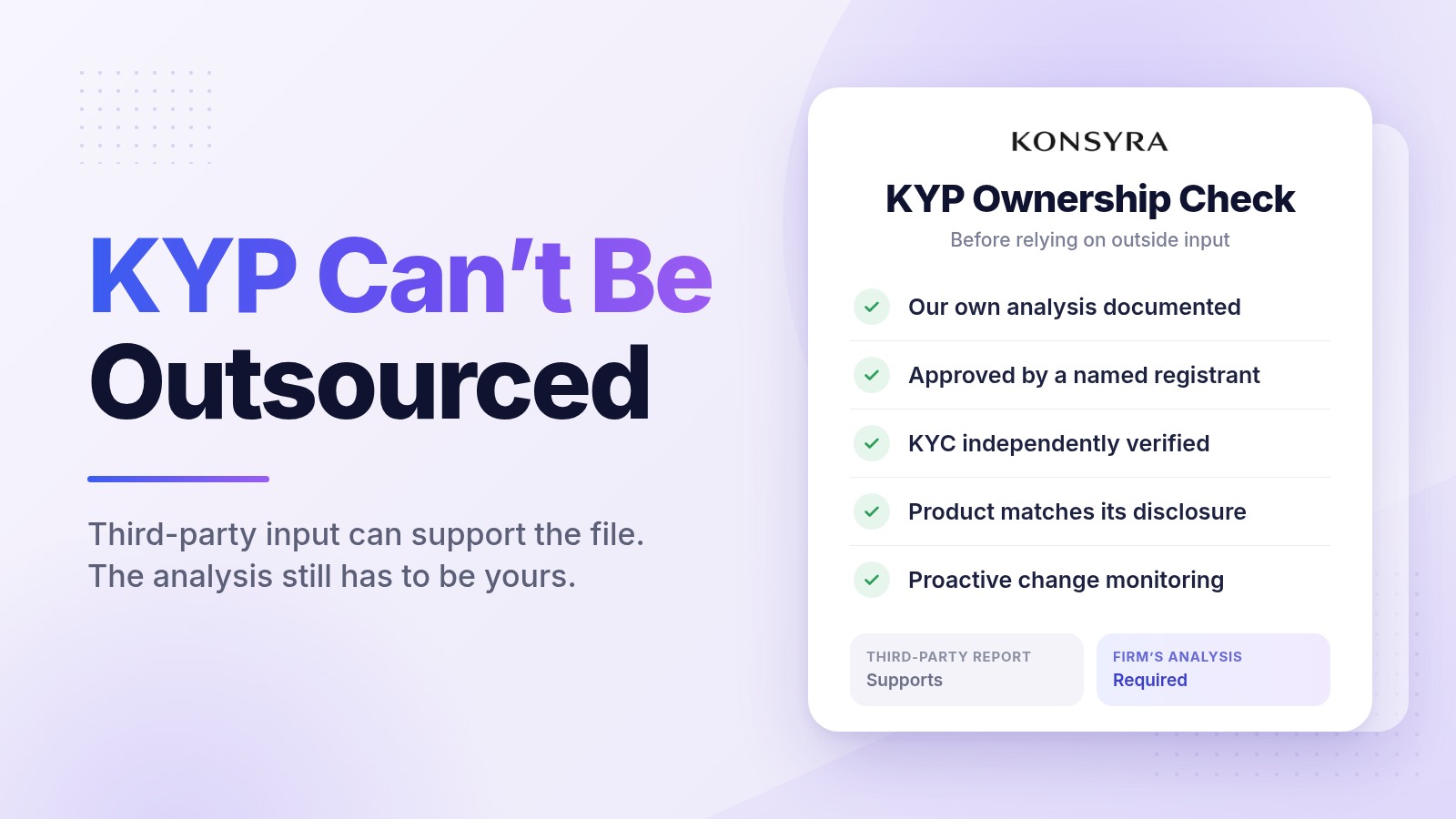
Joint CSA/CIRO Staff Notice 31-368, published December 10, 2025, draws the line clearly: “While third-party reports can support KYP assessments, firms need to document their own analysis.”
That’s the distinction. Support versus substitute.
The same notice flagged related failure modes. Firms that “relied solely on the affiliate’s KYP to discharge their own KYP assessment obligations.” Firms that “passively relied on issuers or product manufacturers to notify them of changes.”
It also lists reliance done right among acceptable firm practices. At firms specializing in niche sectors, greater reliance is placed on KYP assessments completed by individuals with the necessary expertise, and approval is often granted by a registered individual, such as a supervisor or the CCO, based on a review of that analysis.
Expert input, inside the firm’s own process, reviewed and approved by a registrant. That’s reliance with a paper trail.
The quieter hand-off: capacity
Not every hand-off is to another party. Sometimes the work just doesn’t get done.
Section 2.2.7 describes a PM with a client-to-advising representative ratio exceeding 600 to 1. Staff found inadequate client servicing, “including failures to meet with clients at least annually to update KYC information and reassess suitability.”
Staff are clear that there is “no bright-line test” for the right number. But firms must assess it on an ongoing basis.
A process that only works on paper isn’t a process. If the people responsible can’t get to the KYC update, the obligation still sits with the firm.
What documentation should show
The report’s guidance points the same way. For CTPs: “maintain books and records that evidence their independent KYP assessment,” and have the CCO/UDP make and document the final decision to add, maintain or remove a crypto asset. For alternative investments in managed accounts: “We expect firms to maintain substantial documentation to support their KYP process for these products.”
A useful self-check for any product or recommendation that leaned on outside input:
- Whose analysis is this? If it came from an issuer, affiliate, wholesaler or research provider, where is the firm’s own review of it?
- Who decided? Is there a named registrant who approved the product or the recommendation, and a date?
- Was it checked? Did anyone independently verify KYC information that came from someone else?
- Does it match the documents? Does the product as understood match the product as disclosed?
- Who’s watching for changes? Is monitoring proactive, or does it depend on the issuer calling?
- Is there capacity? Can the people responsible actually complete the annual KYC updates and suitability reassessments?
None of these questions require doing the research from scratch.
They require showing that the firm did the thinking.
The bottom line
Outside research, affiliate work and issuer documents can all support a KYP or suitability file.
They can’t be the file.
The OSC’s 2026 report shows what happens when they are. Leverage recommended by someone unregistered. Product reviews left to an affiliate. KYC collected by the issuer’s principal. Concerns no one identified.
Use the help. Then document your own analysis.
How Konsyra helps
Konsyra is built to support your analysis, not replace it.
It produces structured KYP reports for S&P 500, NASDAQ and S&P/TSX Composite stocks, US-listed and Canadian ETFs, and Canadian mutual funds. Each report links to pre-curated filings, transcripts and fund facts, so you can check the product as understood against the product as disclosed.
You set the investor profile, objectives and risk tolerance, then export to DOCX, so the report goes into the file as part of your own documented review. With Batch KYP Reports (Pro), you can review several products in one pass.
Watchlist keeps key metrics in view, so your monitoring doesn’t wait for an issuer to call. And Research adds earnings summaries plus sector and macro context.
The research is a starting point. The judgment stays yours.
Sources
- OSC Staff Notice 33-762, Registration, Inspections and Examinations Division 2026 Annual Report (October 7, 2026)
- OSC news release: OSC publishes the RIE Division 2026 Annual Report (October 7, 2026)
- Joint CSA/CIRO Staff Notice 31-368, Client Focused Reforms: Review of Registrants’ Know Your Client, Know Your Product and Suitability Determination Practices and Additional Guidance (December 10, 2025)
Continue reading
Risk Isn't One Number. Take the More Conservative.
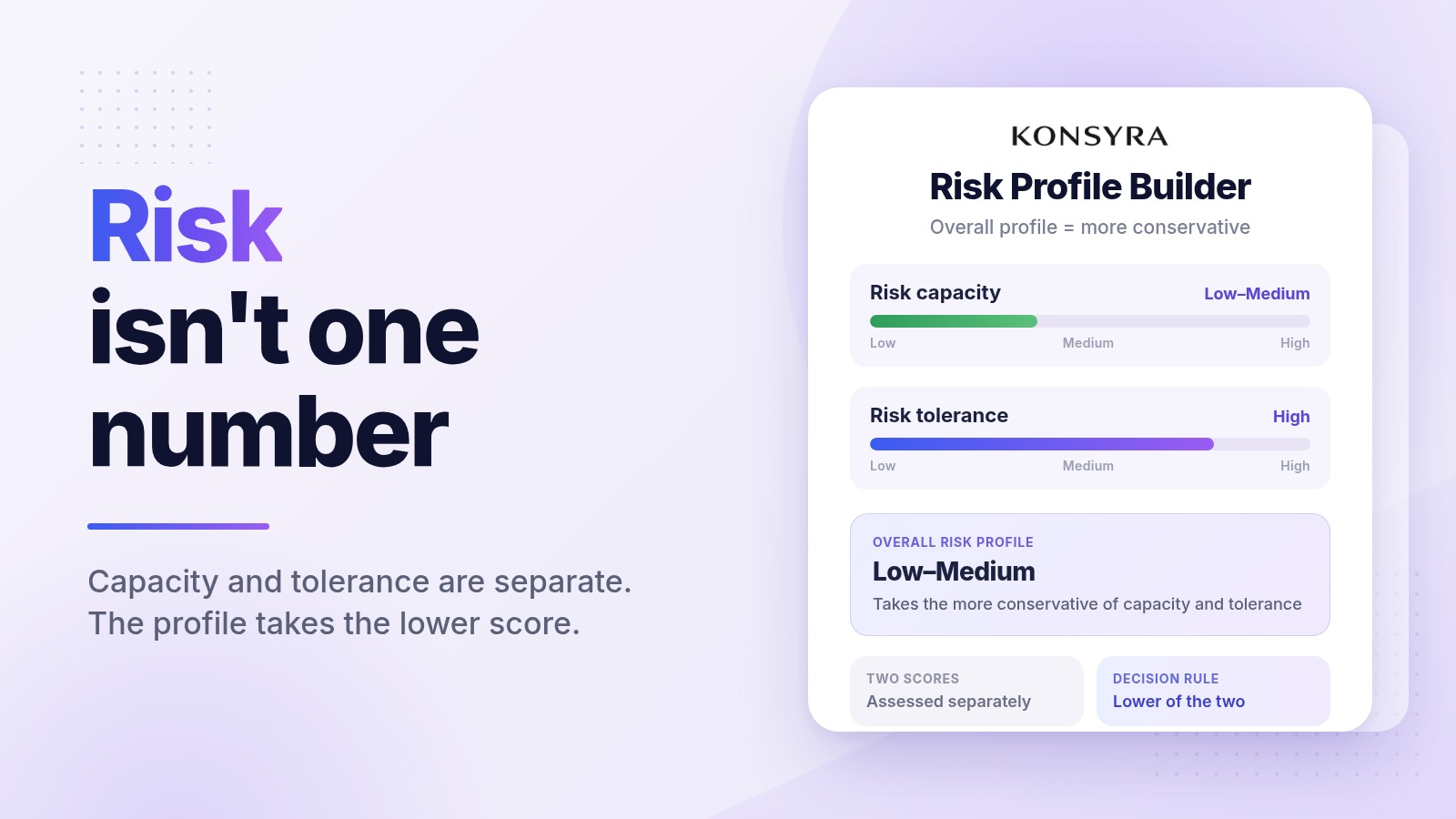
CIRO Bulletin 26-0200 spells out what the Phase 2 CFR sweep already found: risk capacity and risk tolerance are separate assessments, and the overall risk profile should reflect the more conservative of the two.
The Chargeback Ban Starts in 2028. The Conflict Is Already Here.
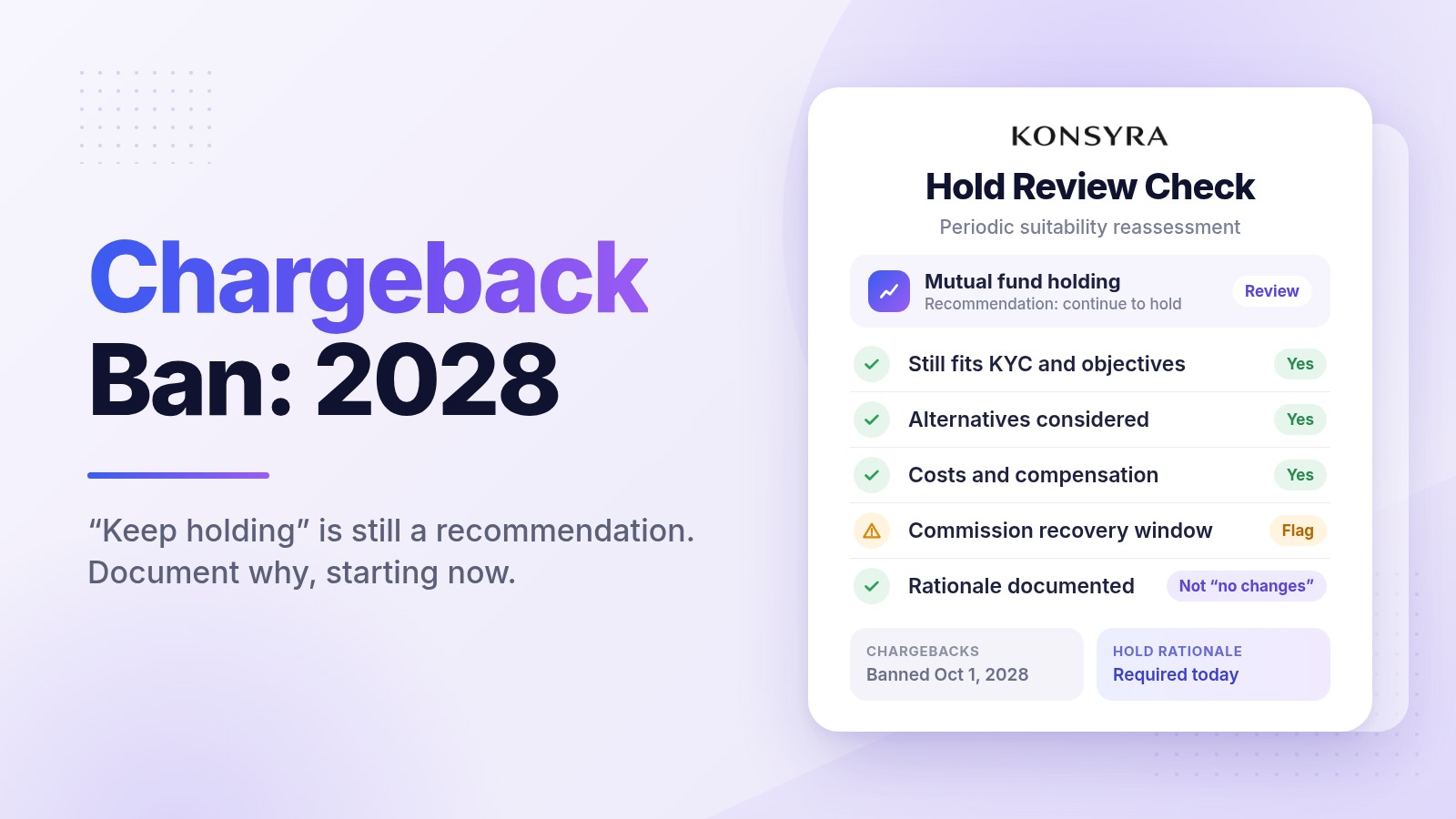
The CSA's chargeback ban takes effect in 2028, but the conflict it targets shows up today in every "keep holding" recommendation. Here's what to document now.
A Foreign ETF Is Not a Canadian ETF With a Different Ticker
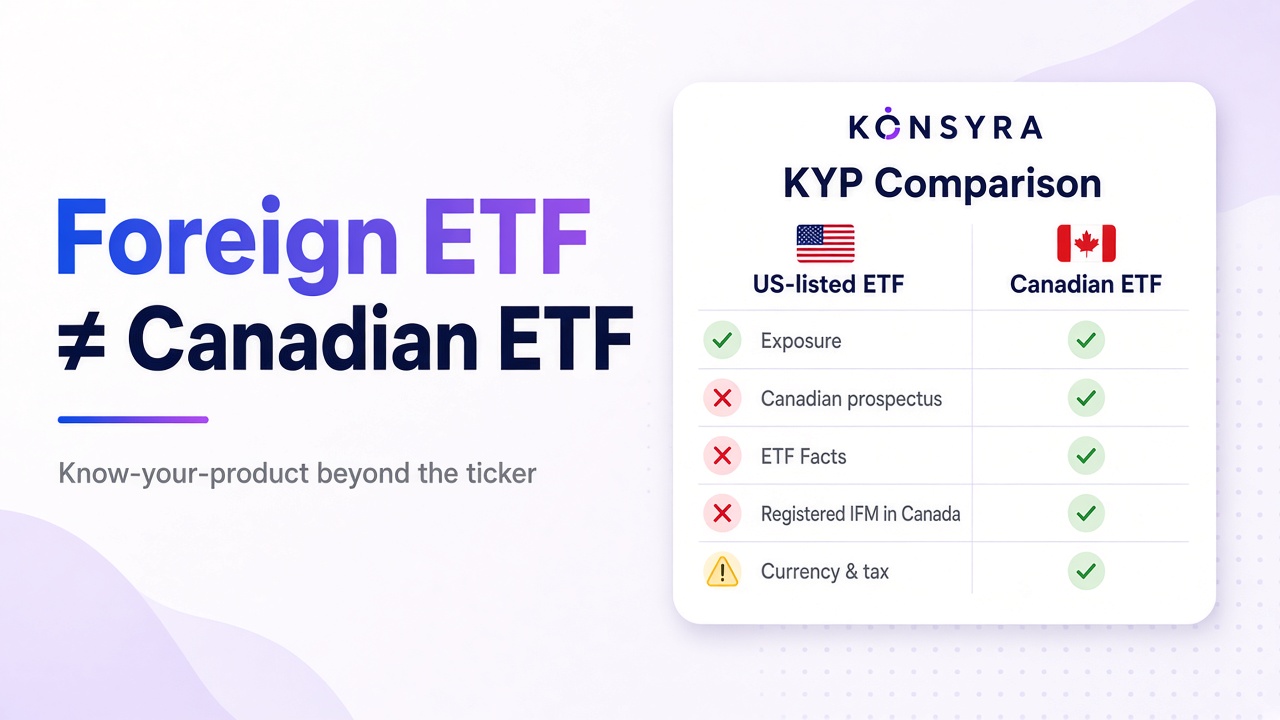
The exposure may look the same. The protections around it don't.