
The Chargeback Ban Starts in 2028. The Conflict Is Already Here.
The CSA's chargeback ban takes effect in 2028, but the conflict it targets shows up today in every "keep holding" recommendation. Here's what to document now.
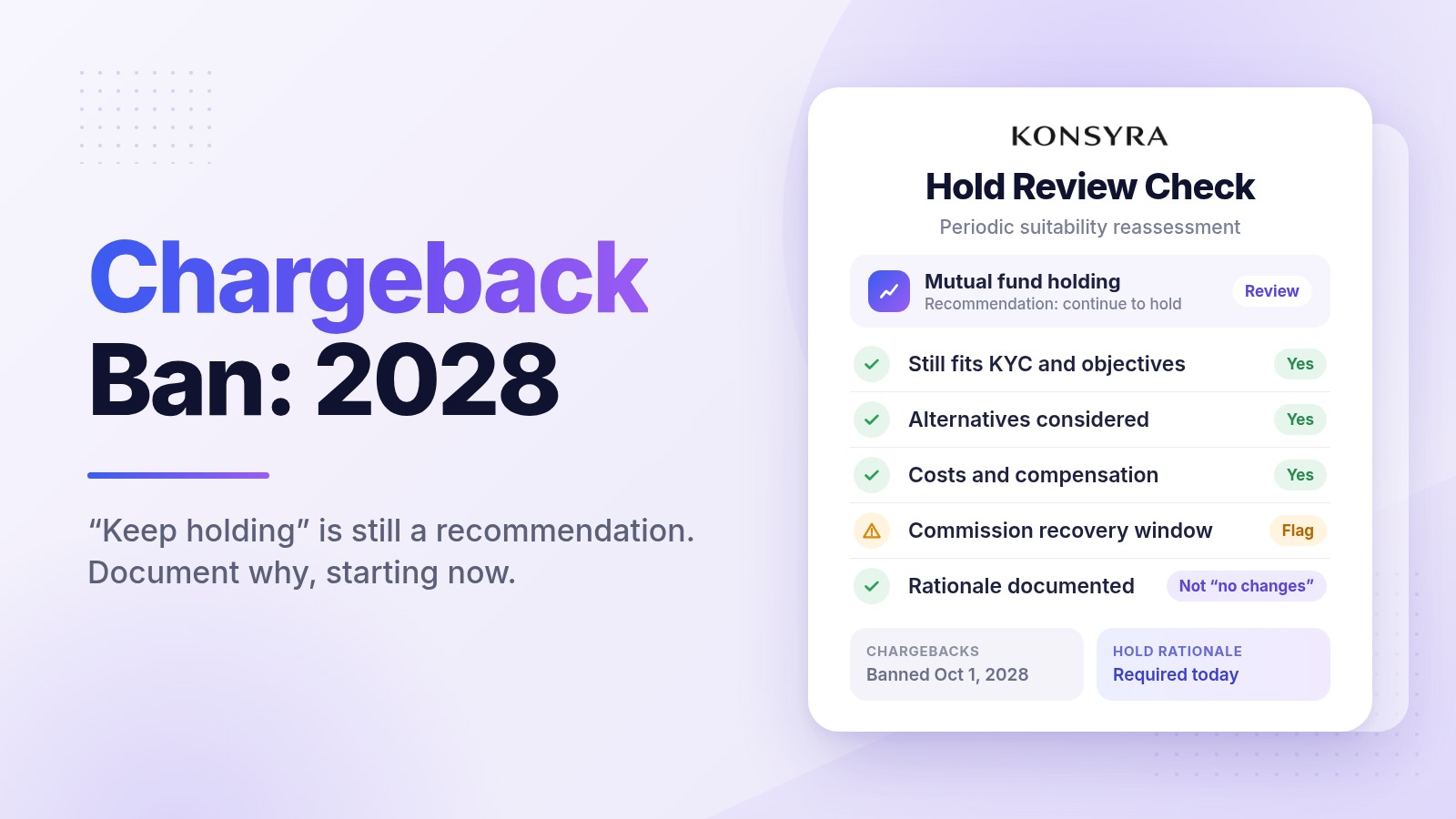
On October 8, 2026, the Canadian Securities Administrators published final amendments to NI 31-103 that prohibit chargebacks in the distribution of investment funds that are reporting issuers.
Subject to ministerial approvals, the ban comes into force on October 1, 2028.
Two years is a long runway. It’s tempting to file this one under “later.”
That would miss the point. The CSA didn’t discover a new conflict on October 8. It described one that already exists, and explained why it chose a ban over better controls.
What a chargeback actually is
The OSC news release gives the short version. Dealers or dealing representatives sometimes receive an upfront commission or payment when a client buys. “Chargebacks occur when clients redeem their securities before a fixed schedule, and the dealing representative is required to repay all or part of the upfront commission or payment.”
The notice compares it to the deferred sales charge, “which is now banned.” The difference is who pays. The DSC was charged to the investor. A chargeback is a payment between registrants: the client redeems, and the rep pays their dealer back.
The client never sees that bill. That’s part of the problem.
Why the CSA chose a ban
The conflict is simple. A rep keeps the whole upfront commission if the client doesn’t redeem before the chargeback period ends. But, as the notice puts it, a client “may want to, or need to, redeem” before then.
The notice says a rep “may attempt to dissuade their client from redeeming” to avoid paying the commission back. And it says the conflict “increases as the amount of the upfront commission and the duration of the Chargeback Period increase.”
Then it points somewhere compliance doesn’t always look: the review. It’s “reasonably foreseeable,” the CSA says, that when reassessing suitability, including at the required periodic KYC review, a rep “may also be influenced to put their financial interests ahead of their client’s interests and recommend that a client continue to hold securities which are subject to a Chargeback Period.”
Some commenters argued existing rules already handle this. The CSA’s answer was that the amendments complement the Client Focused Reforms by making clear that registrants must address this conflict “by avoiding this practice as opposed to implementing controls to mitigate those conflicts sufficiently.”
Worth noting: the CSA says “current use of Chargebacks is limited.” It acted anyway, to address the issue “before Chargebacks become entrenched and a widespread industry practice.”
The proposal called for a six-month transition. The final version allows 24 months, partly because two scholarship plan dealers would need to rework their compensation models.
“Keep holding” is a recommendation
This is the practical takeaway, even if your firm has never used a chargeback.
Joint CSA/CIRO Staff Notice 31-368, published December 10, 2025, already says it directly: “the suitability determination requirement applies to recommendations or decisions to continue to hold securities.”
The same notice says reassessments should consider “whether alternative securities would better serve the client’s interests (including consideration of, for example, transaction costs and tax implications).” And it adds: “Records should show a meaningful reassessment; generic notes like ‘no changes’ are insufficient.”
Put the two notices side by side. One describes a conflict that pushes toward “stay put.” The other says “stay put” needs a suitability rationale.
A hold made for the client’s reasons and a hold made to protect a commission look identical in the account.
The difference only shows up in the file.
The ban has a long tail
Two details push the issue past October 2028.
The legacy provision. New section 11.11(2) says the ban doesn’t apply to a redemption “if the client purchased the security before October 1, 2028.” Read plainly, positions bought under a chargeback arrangement before then can stay subject to it after the ban starts.
The scope. The ban is triggered by a redemption. The CSA addressed two lookalikes that aren’t:
- Cancelled PACs. Recovering upfront commissions when a client cancels a pre-authorized contribution plan isn’t caught, because no redemption triggers it. But the CSA calls the conflict “an inherent conflict of interest” that is “in our experience, almost always a material conflict of interest which we expect registrants to address in the best interest of their clients.” That may mean avoiding it altogether.
- Transfers out. Commission recoveries on transfers to another institution fall outside the ban “to the extent that the recovery of commissions is not triggered by a redemption of securities.” Conflicts obligations still apply. And if the client redeems before transferring, the ban applies.
So “not banned” isn’t the same as “fine.”
What to do before 2028
You don’t need to wait for the effective date to tidy up. A few questions worth asking now:
- Where are the clawbacks? Any compensation that can be recovered when a client redeems, cancels a PAC or transfers out is a conflict worth mapping, whatever your firm calls it.
- Can supervision see it? When a hold recommendation is reviewed, does anyone know whether the position sits inside a recovery window?
- Do holds have reasons? For each position kept at a periodic review, is there a note on why it still fits the client and what alternatives were considered?
- Are costs part of the decision? SN 31-368 says registered individuals should consider relative costs, “including any compensation paid directly or indirectly to the firm or individual,” and document the rationale if recommending higher-cost products.
- Is the product file current? A hold is only as good as the KYP behind it. Fees, series and fund facts should reflect the product as it is now, not as it was at purchase.
- Who owns the rule change? CIRO “expects to amend their respective member rules, policies and guidance to be uniform with the Amendments in all material respects.” Someone should be watching for that.
The bottom line
The CSA decided this conflict was better avoided than managed. The ban takes effect October 1, 2028, subject to approvals.
The suitability obligation on a hold recommendation applies today.
So write down why the client is still in the fund. If the reason has nothing to do with your compensation, that should be easy.
How Konsyra helps
A hold decision is only as defensible as the product file behind it.
Konsyra produces structured KYP reports for Canadian mutual funds, Canadian and US-listed ETFs, and S&P 500, NASDAQ and S&P/TSX Composite stocks, with linked fund facts, filings and transcripts. That makes it easier to check costs and weigh alternatives when you reassess a position, instead of writing “no changes.”
Set the client’s investor profile, objectives and risk tolerance, then export to DOCX, so the reasoning for keeping or switching lands in the file. Batch KYP Reports (Pro) help when a periodic review covers many holdings at once. Watchlist keeps the products your clients hold in view, and Research adds earnings summaries plus sector and macro context.
The tool helps you make the case. Whether to hold is still your call.
Sources
- CSA Notice of Amendments to National Instrument 31-103 Registration Requirements, Exemptions and Ongoing Registrant Obligations – Prohibition on the Use of Chargebacks in the Distribution of Investment Fund Securities (October 8, 2026)
- OSC news release: Canadian securities regulators publish final amendments prohibiting chargebacks in investment fund distribution (October 8, 2026)
- Joint CSA/CIRO Staff Notice 31-368, Client Focused Reforms: Review of Registrants’ Know Your Client, Know Your Product and Suitability Determination Practices and Additional Guidance (December 10, 2025)
Continue reading
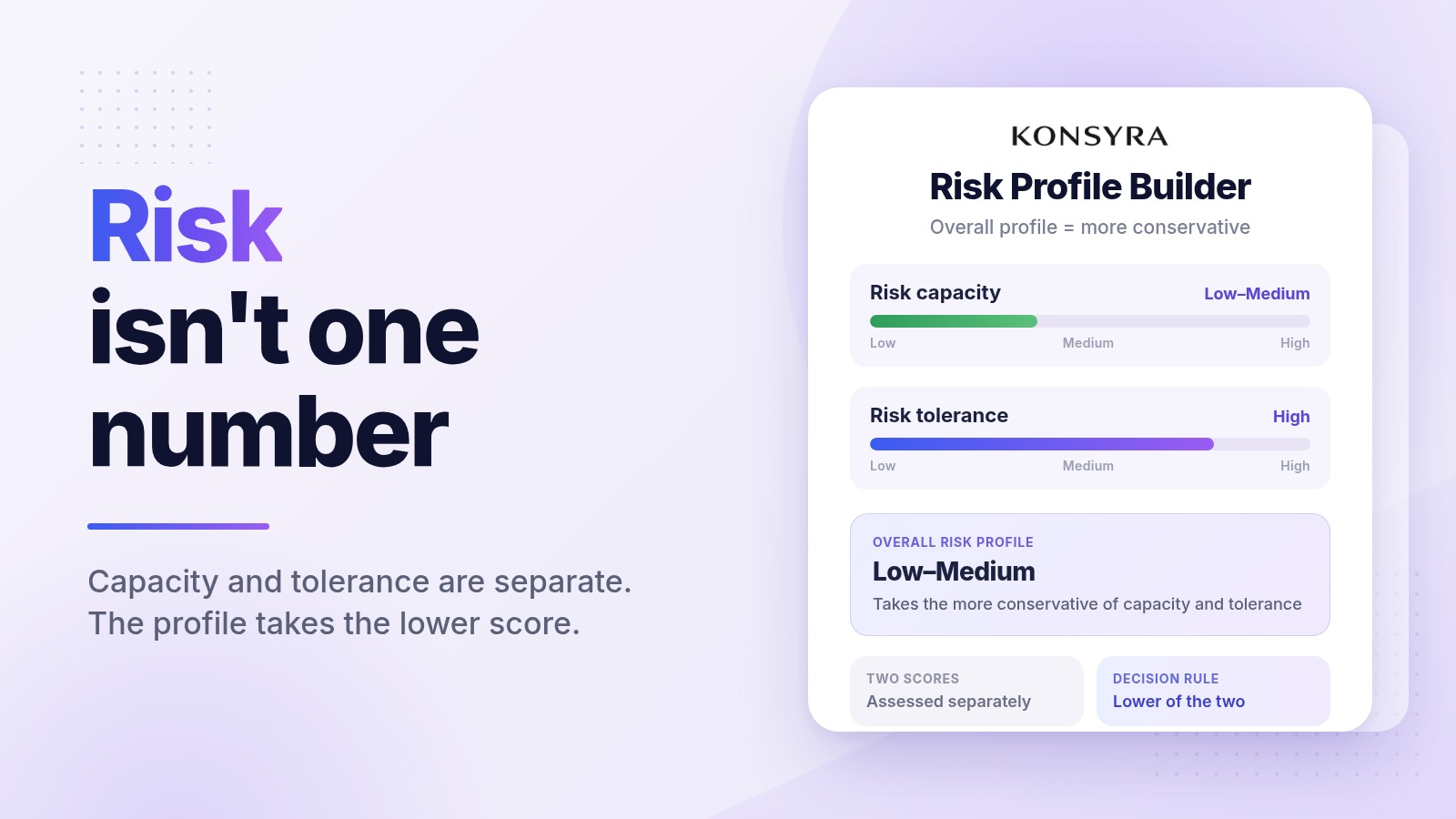
Risk Isn't One Number. Take the More Conservative.
CIRO Bulletin 26-0200 spells out what the Phase 2 CFR sweep already found: risk capacity and risk tolerance are separate assessments, and the overall risk profile should reflect the more conservative of the two.
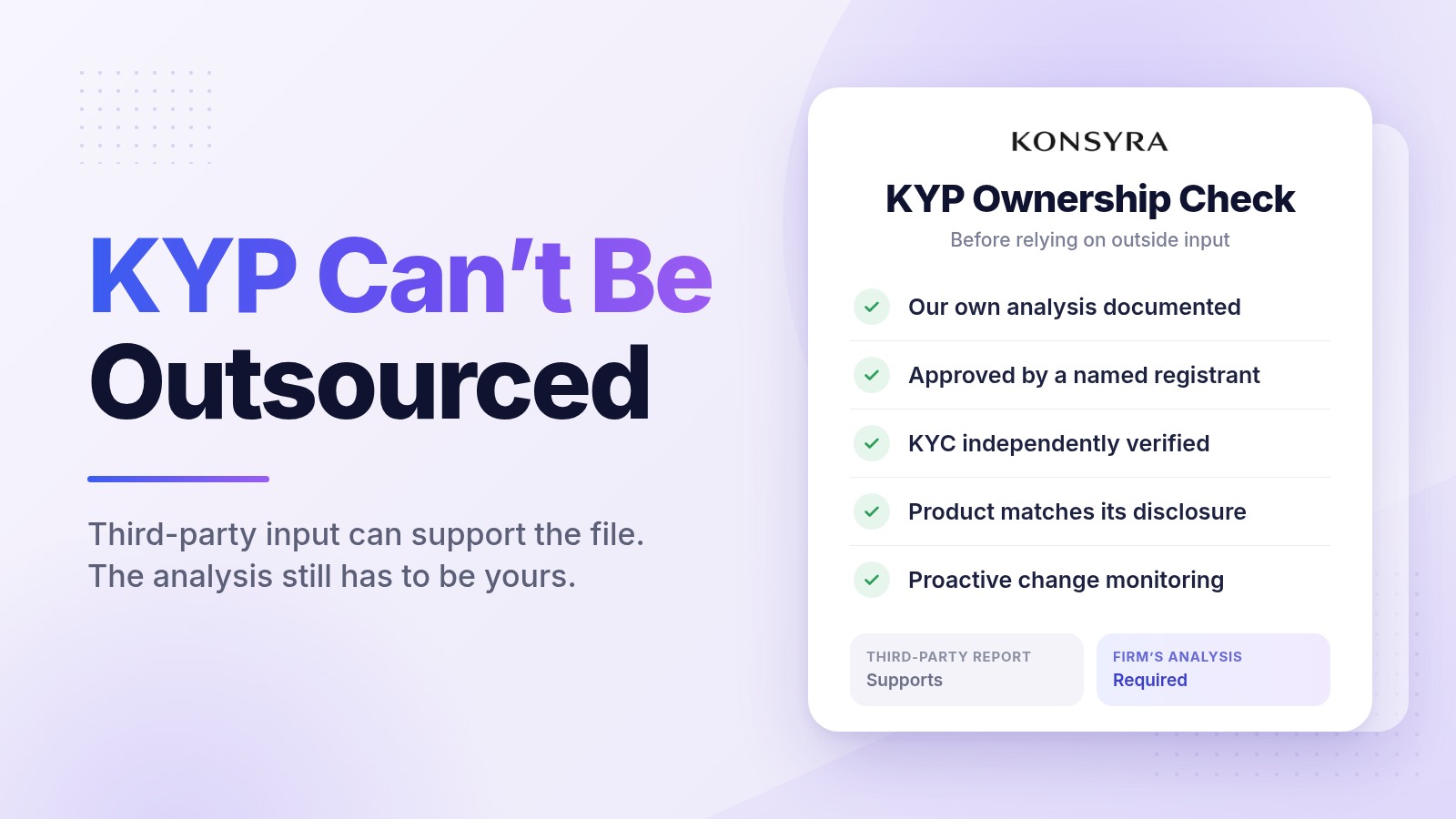
KYP Can Be Supported. It Can't Be Outsourced.
Third-party research can support a KYP file. The OSC's 2026 RIE report shows what happens when it replaces the firm's own analysis.
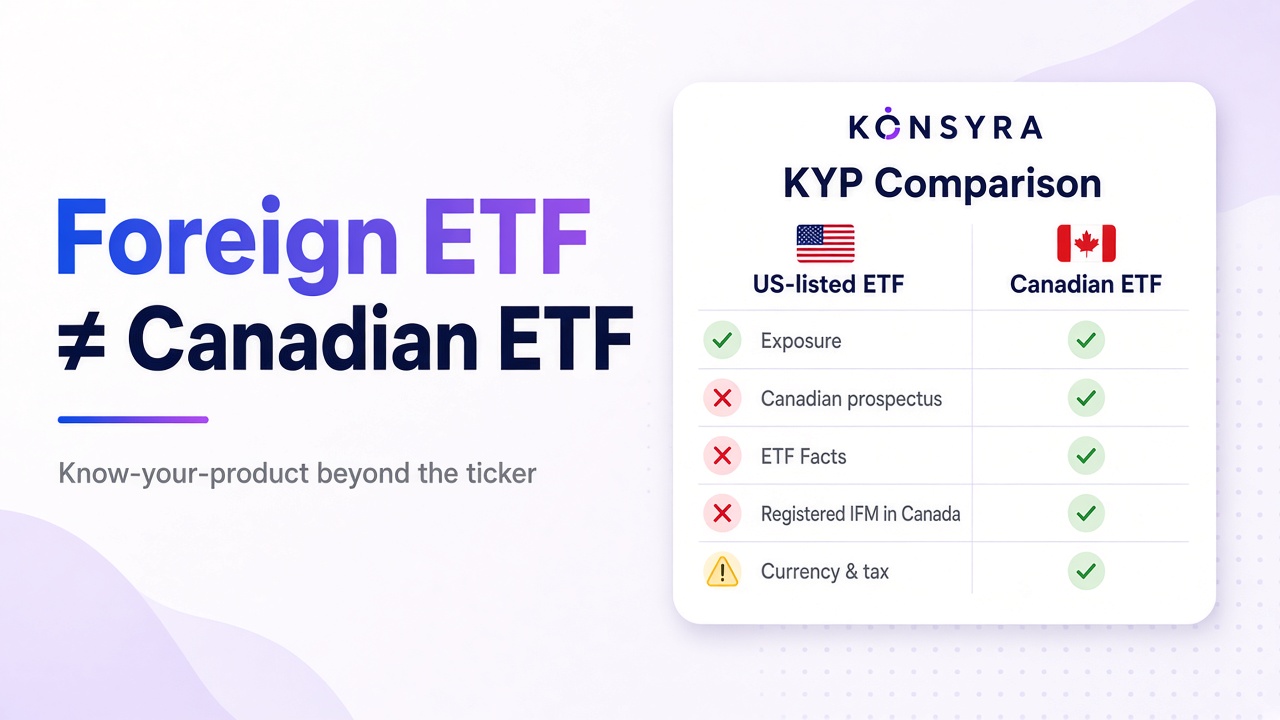
A Foreign ETF Is Not a Canadian ETF With a Different Ticker
The exposure may look the same. The protections around it don't.